

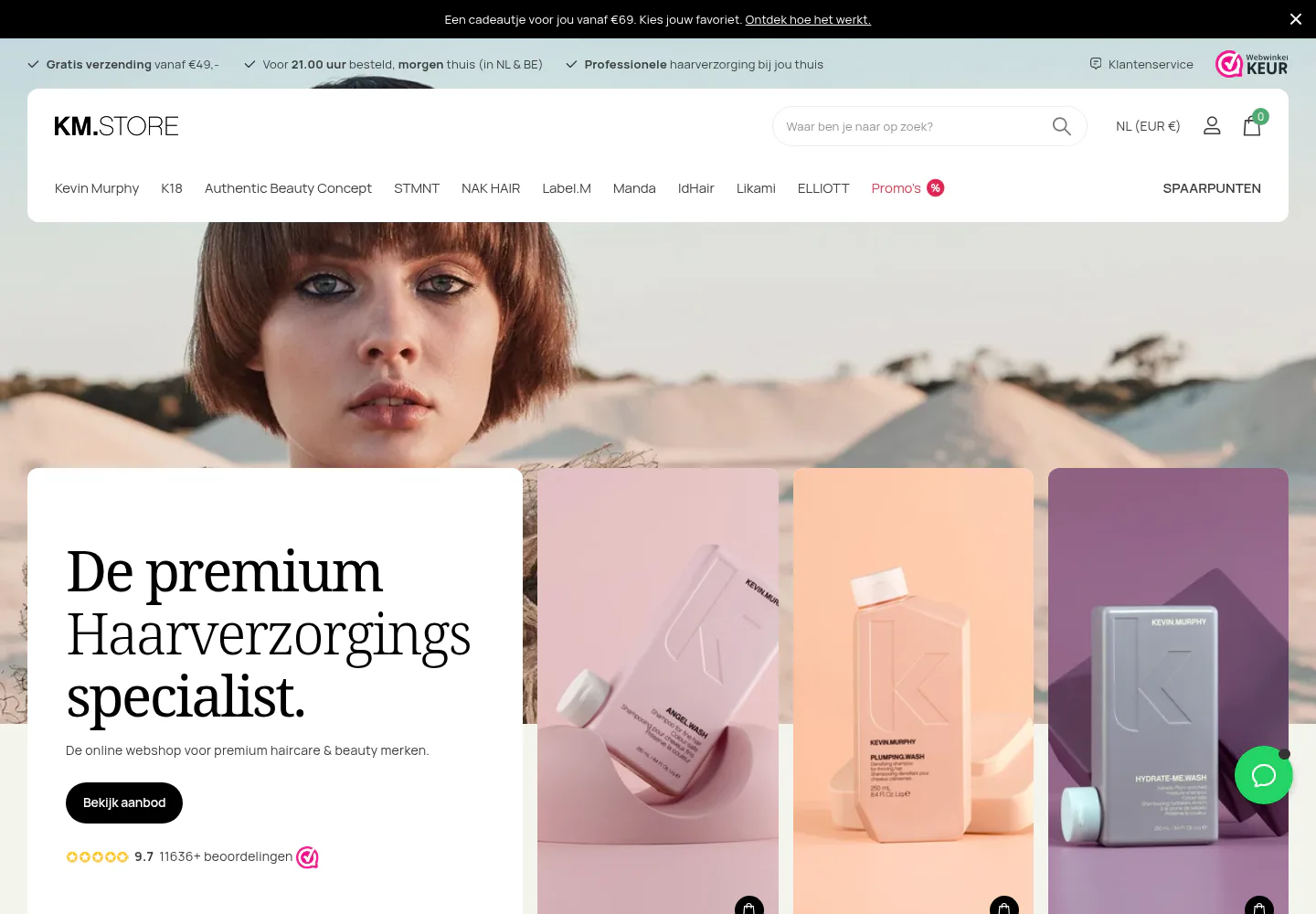

Where KM.Store started
The old platform held everything the team had built: product data with custom fields, customer groups, a decade of orders and a search presence that could not be put at risk. A manual rebuild meant a frozen shop and weeks of guesswork.
- 01Product data spread over custom fields with no clean model
- 02Order and customer history that had to stay intact for service and returns
- 03Rankings and traffic that carried most of the revenue
- 04No room for a weekend with the shop offline
How the migration ran
Four phases, one runbook, one owner per step.
Discovery
Full scan of the source platform: data volume, field mapping, edge cases and the risks worth naming before anyone touched the store.
Data migration
Products, variants, collections, customers and orders mapped into the Shopify model and into the official Shopify taxonomy, validated record by record.
SEO migration
Redirect map built from real traffic data, schema and sitemaps prepared, every page that mattered tracked before the switch.
Storebuild and go live
Theme, apps and integrations finished on the new store while Live Sync kept both sides identical, so the cutover was a moment instead of a project.
Products used
Live Sync®
Source platform and Shopify held in lockstep until the switch. Products, orders, customers and stock kept flowing, so no order was lost and no hour was frozen.
Data Transformation
Legacy fields turned into a clean Shopify model: custom fields to metafields, options to variants, categories to collections, customer groups to segments.
Syncer SEO Guard®
Rankings, redirects, indexing and schema monitored before and after go live, with weekly proof of how the move settled.